
The quickest way to see what websites know about you is to run a few free checkers. An IP test shows your address, location and internet provider; a fingerprint test shows the browser and device signals that can identify you even when you use a proxy or VPN. Below are the best free tools in 2026 — Iphey, Whoer, BrowserLeaks, Am I Unique, CreepJS, Cover Your Tracks and Pixelscan — plus free checkers from Gologin and FloppyData.
Use these tools before and after you change your setup, so you can confirm that a VPN, proxy or antidetect browser actually changes what websites see. All of the tools below were online and free to use in October 2026.
Tools at a glance
| Tool | Best for | Main checks |
|---|---|---|
| Iphey | A quick overall verdict | Fingerprint score, IP, DNS leaks, IP blacklists, bot checks |
| Whoer.net | IP and anonymity overview | IP, location, DNS, WebRTC, anonymity score |
| BrowserLeaks | Detailed individual tests | IP and WebRTC leaks, JavaScript, canvas, WebGL, fonts |
| Am I Unique | Measuring uniqueness | Fingerprint attributes compared with other visitors |
| CreepJS | Deep fingerprint analysis | Canvas, WebGL, fonts and signs of spoofing |
| Cover Your Tracks | Tracker protection | Ad and tracker blocking, fingerprint uniqueness |
| Pixelscan | Checking proxies and antidetect setups | Fingerprint consistency, proxy detection, IP, DNS leaks |
| Gologin tools | Free IP and fingerprint checks in one place | IP, location, ISP, browser and device data; canvas, WebGL, WebRTC, hardware |
| FloppyData Free Proxy Checker | Testing proxies before use | HTTP, HTTPS and SOCKS proxies: speed, connectivity, anonymity |
1. Iphey.com
Features
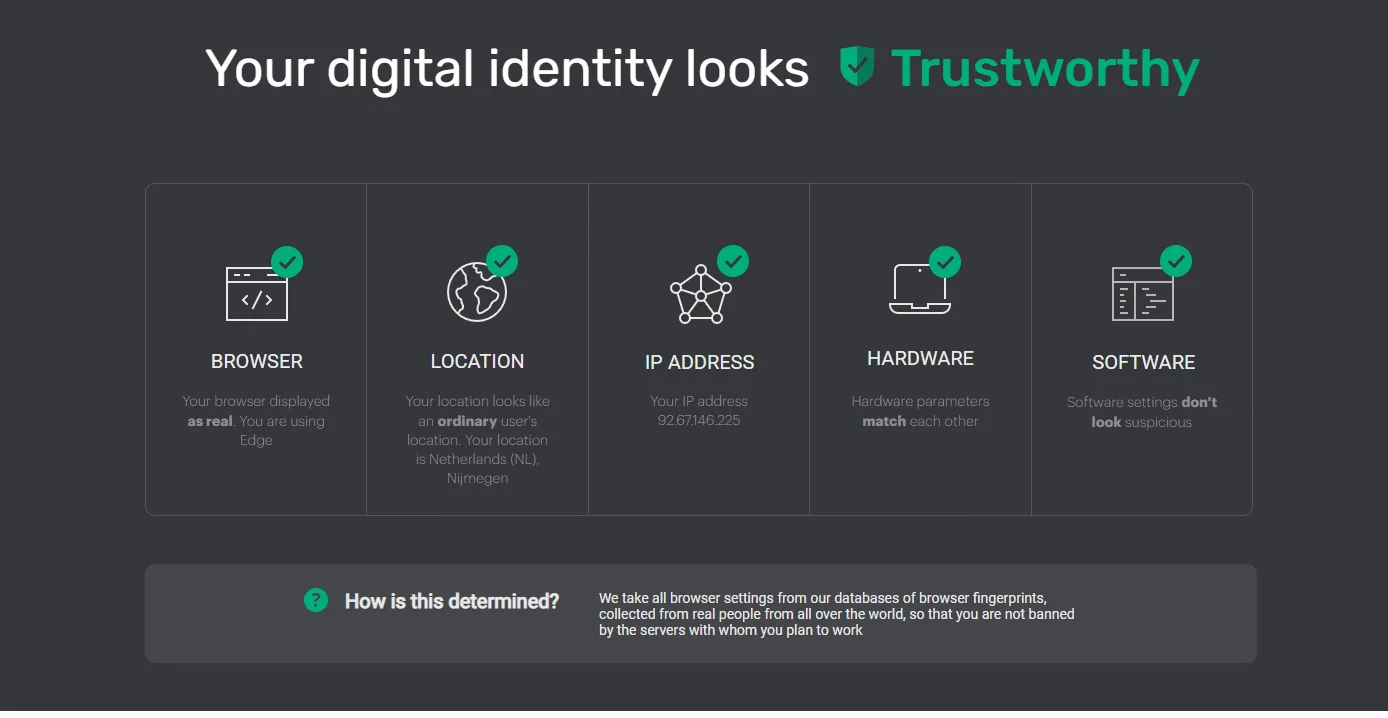
Iphey runs a real-time browser fingerprinting test and sums up how trustworthy your browser looks with a single score. Separate checks cover your IP address, VPN and proxy leaks, DNS leaks, bot-detection signals and whether your IP appears on spam or threat blacklists.
What Websites See About You
Websites can see your IP address, approximate location, internet provider, hardware and software details. This information is used for geo-blocking, targeted ads and flagging suspicious activity.
Verdict
Iphey is an excellent tool for a quick and comprehensive check of your IP and fingerprint. It is user-friendly and efficient, making it a top choice for users who need fast answers.
2. Whoer.net
Features
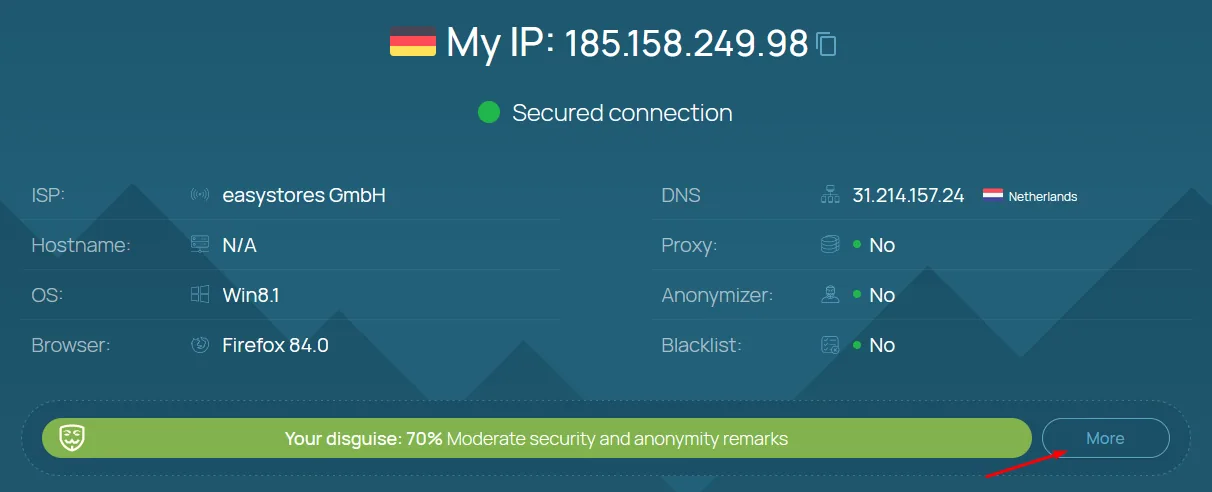
Whoer.net analyses your IP address and parts of your browser fingerprint. It shows your VPN status, DNS servers and WebRTC leaks, and summarises the result as an anonymity score. The site also offers extra tools such as WHOIS lookup and ping tests.
What Websites See About You
Websites can detect your IP address, VPN usage, DNS server details and potential WebRTC leaks. These can undermine your anonymity and the effectiveness of your VPN.
Verdict
Whoer.net goes beyond basic IP checks and gives a clear picture of your online footprint. Its anonymity score makes it a useful first check for privacy-conscious users.
3. Browserleaks
Features
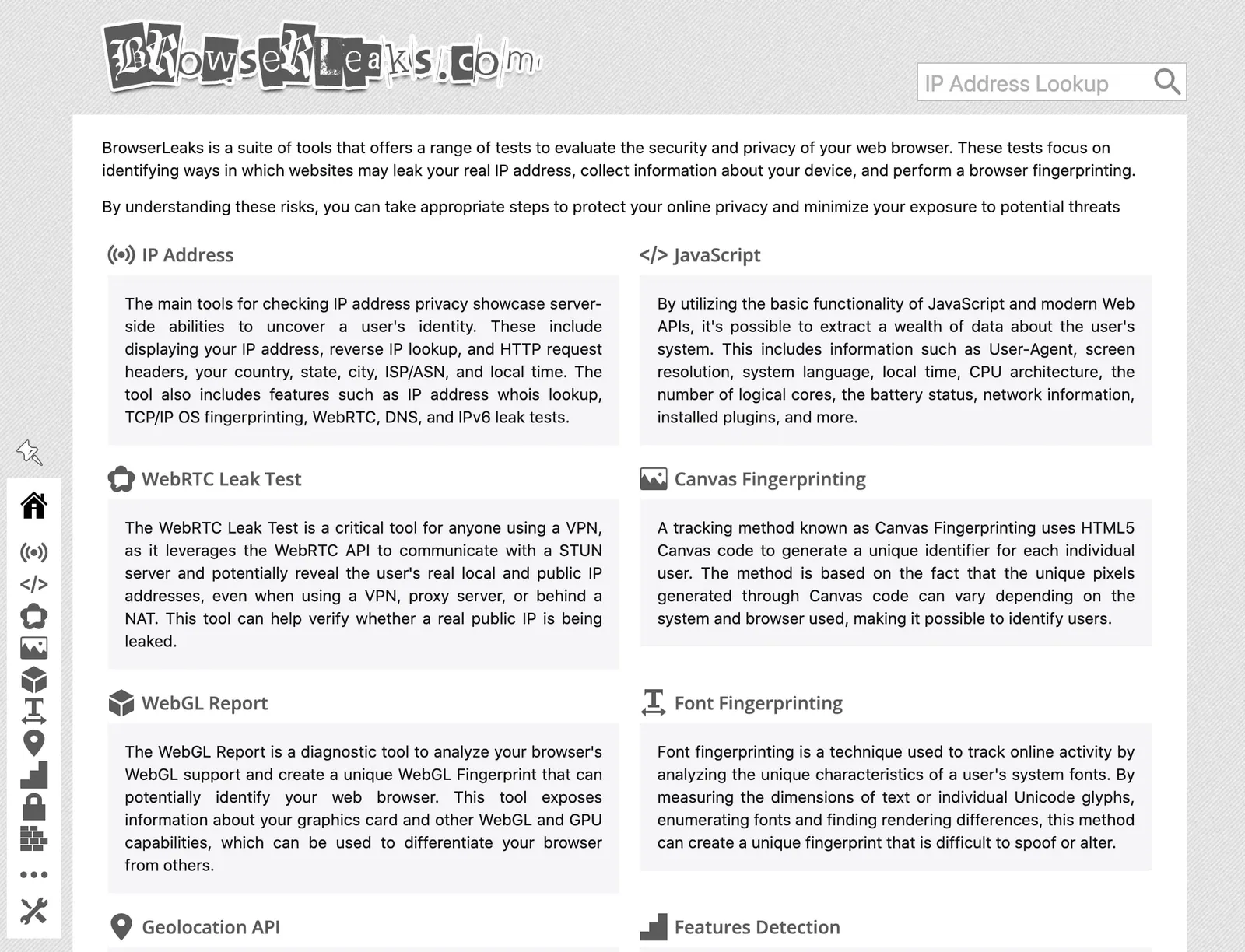
BrowserLeaks offers a suite of tests that examine different parts of your browser fingerprint, including WebRTC, DNS and JavaScript information. Each test runs on its own page, so you can check exactly how your real IP address or device details could leak.
What Websites See About You
Websites can gather extensive details about your browser configuration, installed plugins, screen resolution, and more. This data is used to create a unique fingerprint, potentially identifying and tracking you across the web.
Verdict
BrowserLeaks is an essential tool for anyone serious about understanding their browser fingerprint. Its detailed reports help users identify and fix specific leaks, making it a must-have for tech-savvy users.
4. Amiunique
Features
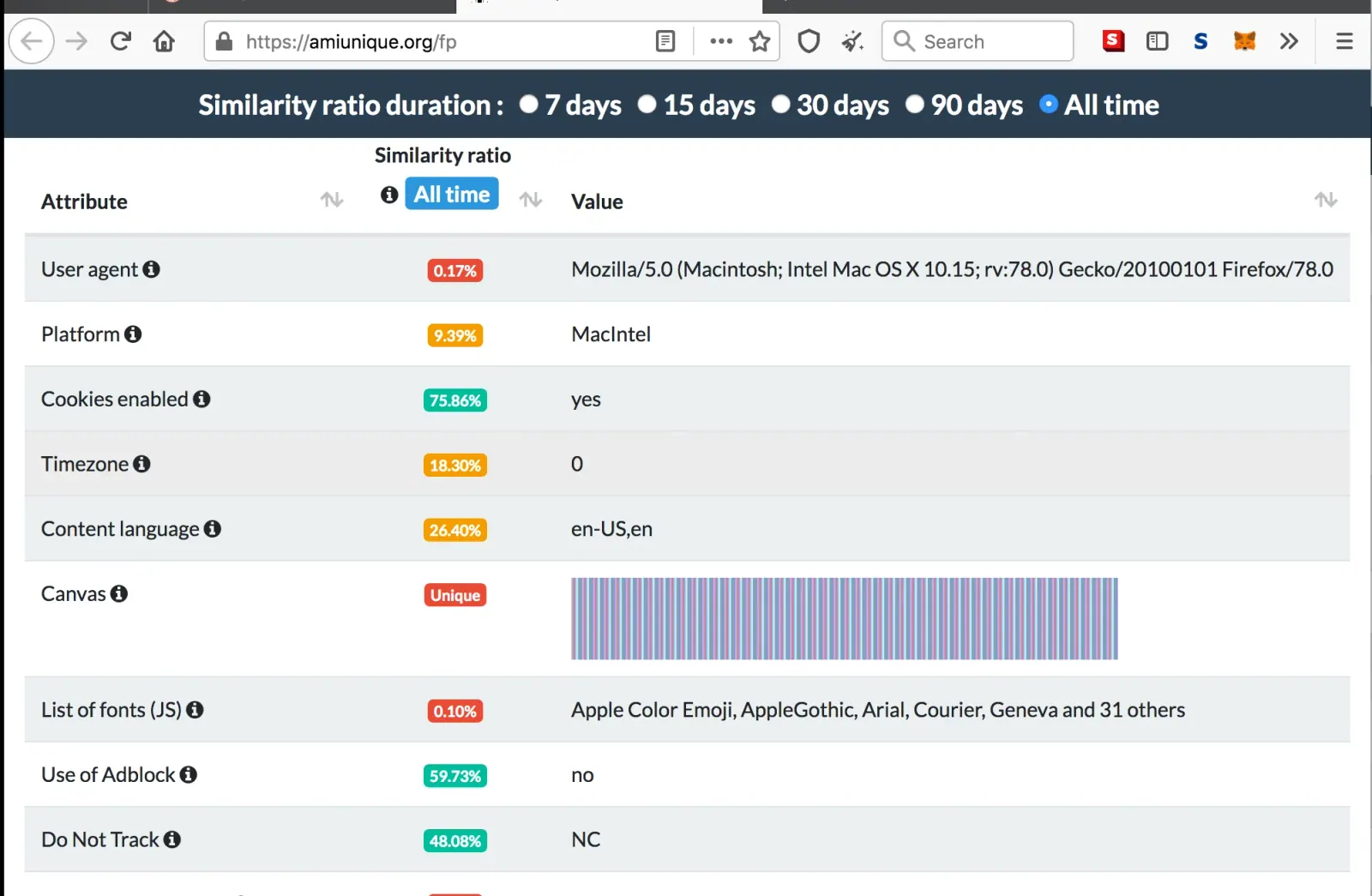
Am I Unique focuses on browser fingerprinting and shows how unique your setup is compared with other visitors. It collects your user agent, HTTP headers, screen resolution and other fingerprinting attributes.
What Websites See About You
Websites can use the collected data to create a unique identifier for your browser, making it easier to track your activities across different sites.
Verdict
Am I Unique is a powerful tool for assessing the uniqueness of your browser fingerprint. Its clear reports make it easy to understand how identifiable you are online and which attributes stand out.
5. Creepjs
Features
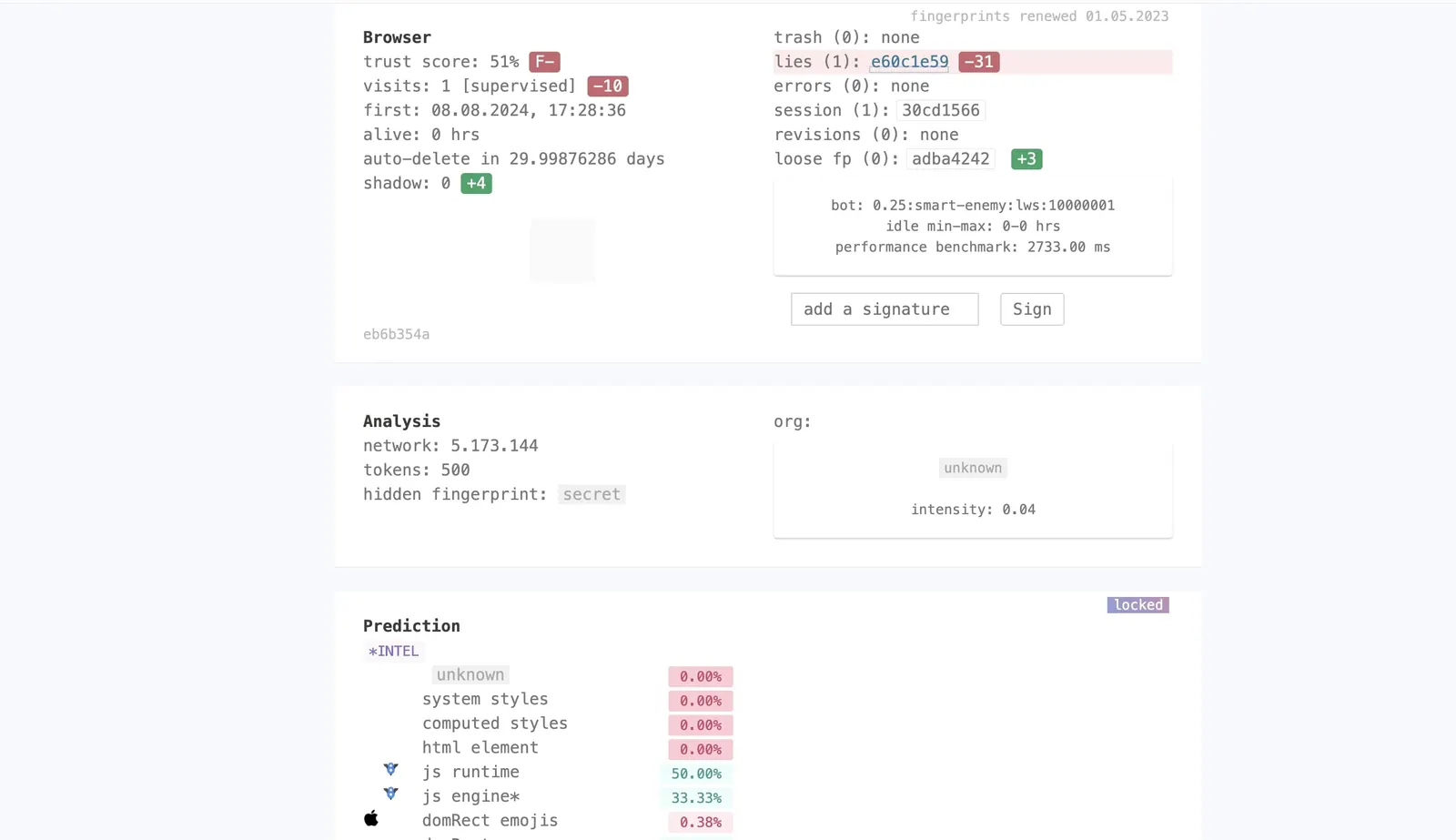
CreepJS is an open-source project that gives a detailed breakdown of your browser fingerprint, including canvas fingerprinting, WebGL and font detection. It also looks for signs that values have been spoofed, which makes it a tough test for privacy tools and antidetect browsers.
What Websites See About You
Websites can gather comprehensive data on your browser settings and hardware capabilities, contributing to a highly unique fingerprint that can be used for tracking.
Verdict
CreepJS is the most demanding test in this list. Its output is technical, but it shows precisely which signals give your setup away.
6. Cover Your Tracks
Features
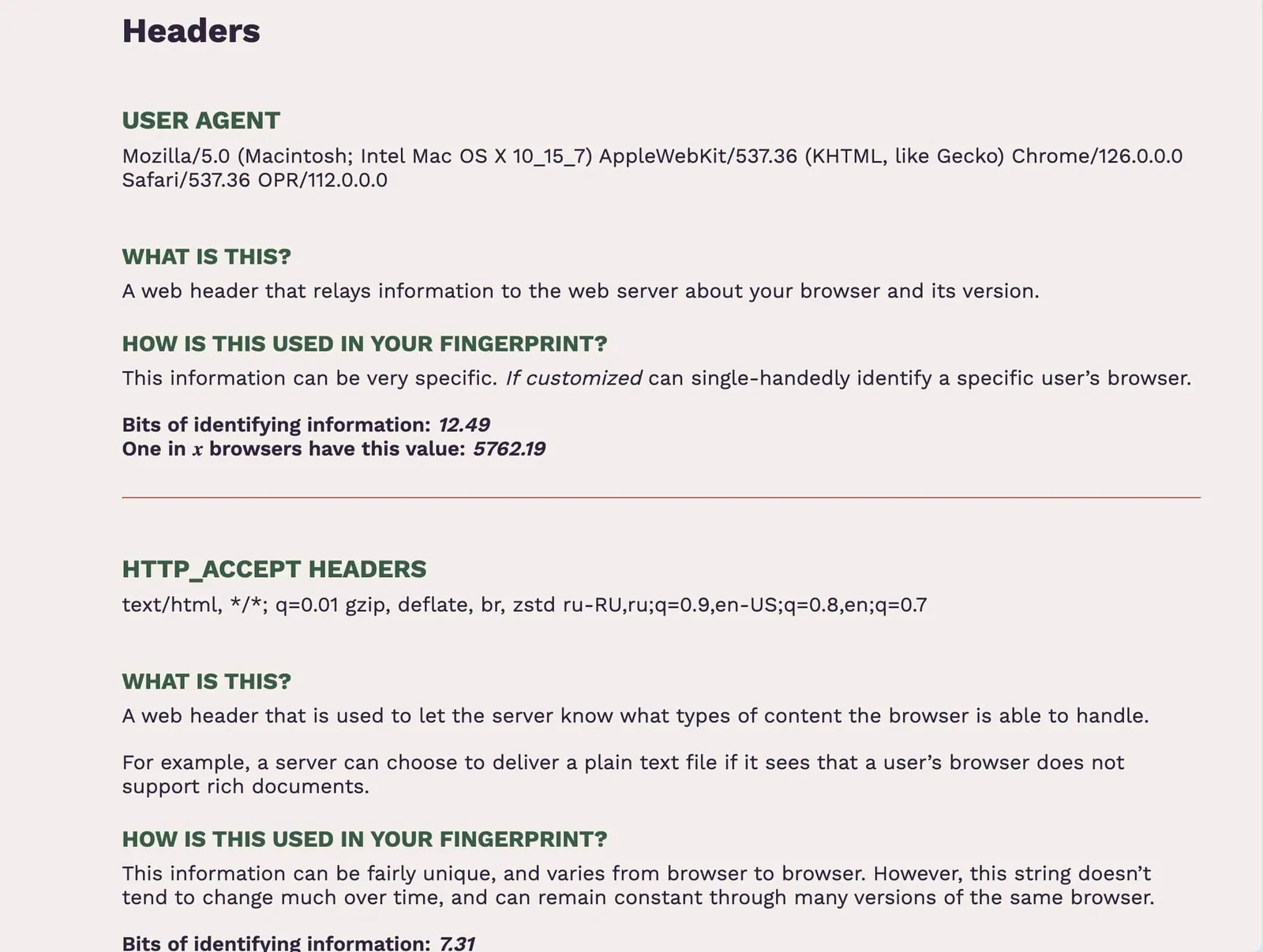
Cover Your Tracks, formerly known as Panopticlick, is run by the Electronic Frontier Foundation. It tests your browser to see how well it protects against tracking and fingerprinting, with a report on trackers, ads and your browser’s fingerprint.
What Websites See About You
Websites can see how well your browser resists tracking techniques and gather fingerprinting data that can be used to follow you across the internet.
Verdict
Cover Your Tracks is a reputable tool backed by a trusted organisation. It is particularly useful for understanding how well your browser resists tracking.
7. Pixelscan
Features
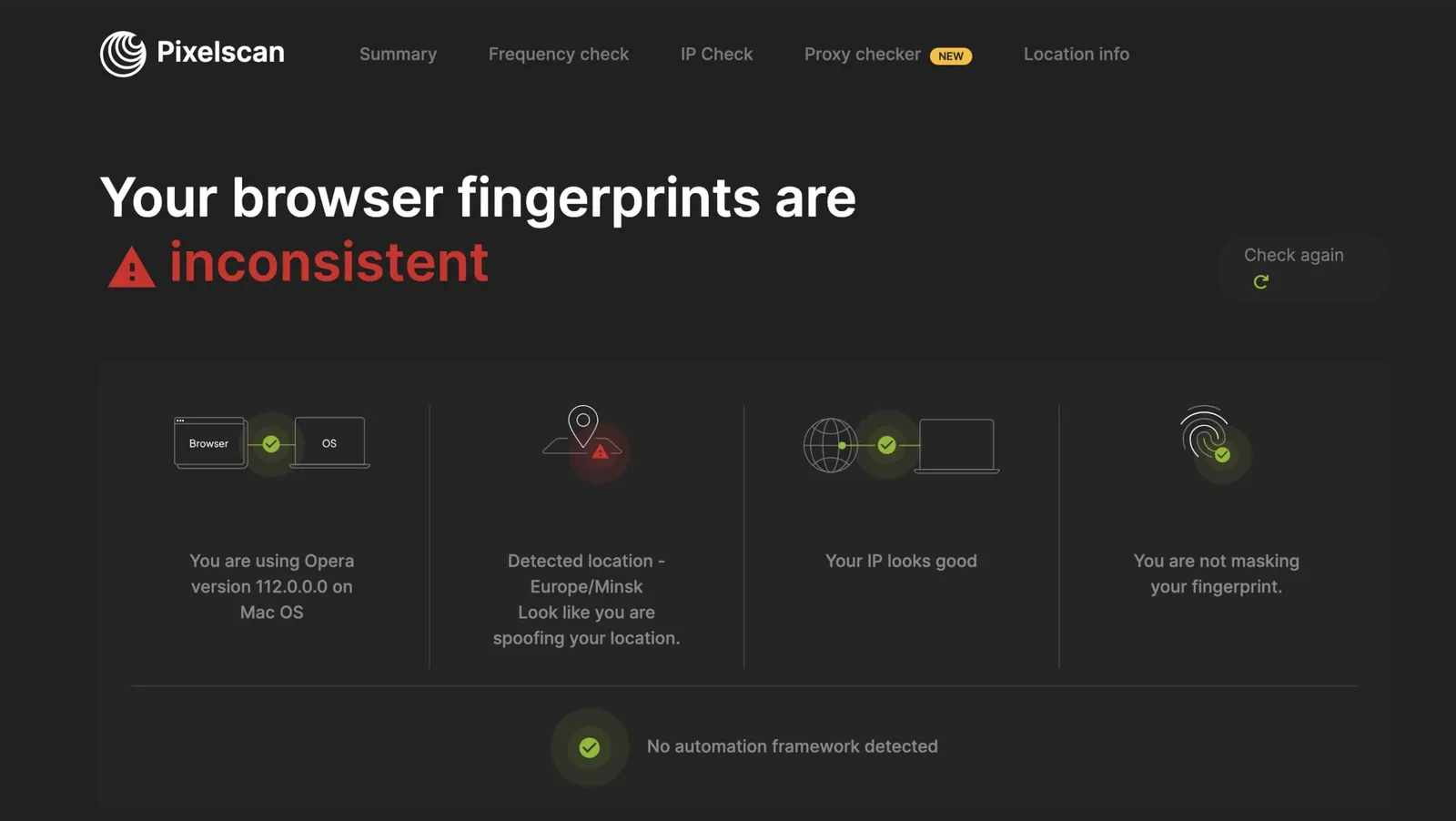
Pixelscan is a multi-check tool for browser fingerprinting, proxy detection, IP analysis and DNS leaks. It shows how detectable your whole setup looks, which is why it is popular for testing proxies and antidetect browser profiles.
What Websites See About You
Websites can collect detailed information on your browser and device setup, creating a robust fingerprint that can be used for tracking purposes.
Verdict
Pixelscan is a comprehensive tool for anyone checking how detectable a setup really is, especially after adding a new proxy or browser profile.
8. Gologin free IP and fingerprint checkers
Gologin, the antidetect browser, offers two free checkers on its website.
- What is my IP shows your IP address and location along with your browser, software, internet provider and device information — what sites see about you at a glance.
- Browser fingerprint test runs Iphey’s real-time fingerprint check on Gologin’s site and reports privacy leaks across canvas, WebGL, WebRTC and hardware specs.
Verdict
These tools are a convenient way to run an IP check and a fingerprint check side by side. If the results show that your real fingerprint is exposed, Gologin itself is the fix: it has a free-forever plan with 3 browser profiles, each with its own consistent fingerprint, and paid plans from $9/month.
9. FloppyData Free Proxy Checker
FloppyData’s Free Proxy Checker tests HTTP, HTTPS and SOCKS proxies for speed, connectivity and anonymity before you add them to a browser profile or scraper. FloppyData’s free tools page also includes a fingerprint and IP location check.
Verdict
Use it to weed out dead or slow proxies before they cause failed logins or blocked sessions. If you need new proxies, FloppyData sells rotating traffic at $1/GB, and one balance works as residential, mobile or datacenter IPs in 190+ locations.
How to check your setup step by step
- Run an IP checker and a fingerprint checker in your normal browser with no VPN or proxy, and note the results as a baseline.
- Turn on your VPN or proxy, or open your antidetect browser profile, and run the same tests again.
- Confirm that the IP address, location and DNS servers now belong to the proxy or VPN, and that the WebRTC test does not show your real IP.
- Check that the timezone and language match the proxy’s location; a mismatch is a common giveaway.
- Compare the fingerprint values. A VPN or proxy changes only your IP, so canvas, WebGL and font results stay the same; to change them per account you need an antidetect browser such as Gologin.
Frequently asked questions
What is the best free tool to check my browser fingerprint?
For a quick verdict, use Iphey or Gologin’s browser fingerprint test, which runs the same Iphey check. For detail, use BrowserLeaks or CreepJS, and use Am I Unique or Cover Your Tracks to see how unique your fingerprint is compared with other visitors.
How do I check whether my proxy or VPN is leaking my real IP?
Open an IP checker such as Gologin’s What is my IP tool, Whoer or Iphey with the proxy or VPN turned on. The IP, location and DNS servers shown should belong to the proxy or VPN, not to your internet provider. Also check the WebRTC test, which can reveal your real IP even when the main IP looks correct.
Can a proxy hide my browser fingerprint?
No. A proxy or VPN changes only your IP address. Canvas, WebGL, fonts, screen size, timezone and other fingerprint signals come from your browser and device. To change them per account you need an antidetect browser such as Gologin.
How can I test a proxy before using it?
Use a proxy checker such as FloppyData’s free proxy checker, which tests HTTP, HTTPS and SOCKS proxies for speed, connectivity and anonymity. Then open an IP checker through the proxy to confirm the location and IP type.
Conclusion
For a fast overall check, start with Iphey, Whoer or Gologin’s free checkers; for detail, use BrowserLeaks and CreepJS; to see how unique you are, use Am I Unique or Cover Your Tracks; and to validate proxies and antidetect profiles, use Pixelscan and FloppyData’s proxy checker. Run them whenever you change your browser, VPN or proxy setup.