
The best browser for privacy depends on whether you need to protect one identity or keep several apart. For everyday private browsing, Brave, Firefox, Mullvad Browser and Tor Browser block tracking with little or no setup. If you run multiple accounts or identities, for example in digital marketing, e-commerce, social media management or crypto, you need an antidetect browser that gives every profile its own fingerprint, cookies and proxy. Our top pick for that is Gologin, which has a free-forever plan and paid plans from $9/month.
Best browsers for privacy at a glance
| Browser | Type | Best for | Free plan | Paid from | Platforms |
|---|---|---|---|---|---|
| Gologin | Antidetect | Multiple identities and teams | Yes, 3 profiles | $9/month ($4.50 billed annually) | Windows, macOS, Linux, Android, cloud |
| AdsPower | Antidetect | Automation-heavy workflows | Yes, 2 profiles | Priced by profiles and members | Windows, macOS, Linux |
| Multilogin | Antidetect | Browser profiles plus cloud phones | Yes, 5 profiles | $11/month | Windows, macOS, Linux |
| Dolphin Anty | Antidetect | Affiliate and ad teams | Yes, 3 profiles | $10/month (Starter) | Windows, macOS, Linux |
| 1Browser | Proxy browser | Simple multi-accounting with built-in proxies | Yes, 5 profiles | $6/month ($5 billed annually) | Windows, macOS, Linux, Android |
| Opera | Mainstream with privacy tools | Free built-in VPN | Free | Not needed | Windows, macOS, Linux, Android, iOS |
| Brave | Privacy browser | Blocking ads and trackers by default | Free | Optional VPN $9.99/month | Windows, macOS, Linux, Android, iOS |
| Firefox | Privacy browser | Open-source, customizable privacy | Free | Not needed | Windows, macOS, Linux, Android, iOS |
Antidetect Browsers vs Regular Privacy Browsers
A privacy browser such as Brave, Firefox or Tor Browser protects one person. It blocks trackers and third-party cookies, and some browsers make your fingerprint harder to single out by randomizing it or by making every user look alike. That is ideal for everyday browsing, but every tab still belongs to the same identity.
Antidetect browsers solve a different problem. They let you create many browser profiles, and each one looks to websites like a separate person on a separate device: its own consistent fingerprint (operating system, screen, fonts and many other attributes), its own cookies and storage, and its own IP address through a proxy. That is what marketers, e-commerce sellers, agencies and crypto users need when they run many accounts on platforms that link accounts by device, and it is why antidetect browsers rank at the top of this list for multi-identity work.
Because each profile should also have its own IP address, antidetect browsers work with proxies. If you need them, FloppyData is an affordable option: rotating traffic costs $1/GB, and one balance works as residential, mobile or datacenter traffic across 190+ locations. It works with Gologin and any other antidetect browser.
What to Look for in a Private Browser
- Tracking protection: blocking third-party trackers, cookies and cross-site scripts by default, not only in a private window.
- Fingerprint protection: randomizing or standardizing your fingerprint, or for multi-identity work, giving each profile a separate and consistent one.
- Data collection by the vendor: how much telemetry the browser itself sends, and whether its business depends on advertising.
- Encryption: HTTPS by default, plus an optional VPN or proxy support to hide your IP address.
- Updates: regular security patches; an outdated browser is one of the biggest risks.
- How it got on your device: be wary of browsers that arrive bundled with other software, such as Wave Browser.
- For teams: profile sharing, roles and an API if several people or scripts work with the same accounts.
The Best Browsers for Privacy in 2026
1. Gologin
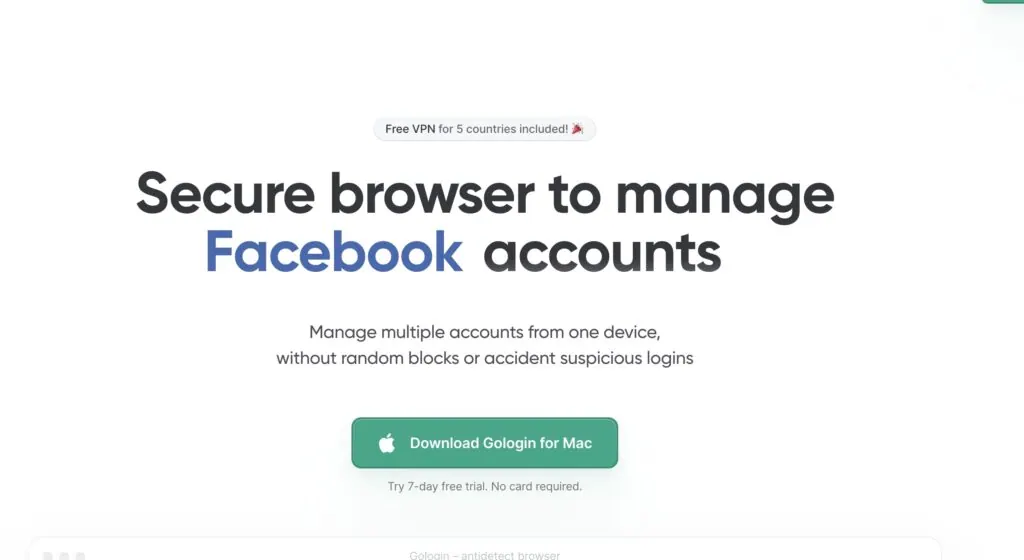
Gologin is an antidetect browser built for managing many online identities privately. Each profile runs in Orbita, Gologin's Chromium-based browser, with its own consistent fingerprint drawn from a large fingerprints database, its own cookies and its own proxy. It runs on Windows, macOS (Intel and Apple silicon) and Linux, has an Android app, and offers a Cloud Browser that runs profiles in the cloud with nothing installed. It is our top pick because it combines a free-forever plan, one of the lowest entry prices, every major platform and team features on every paid plan.
Pricing & Platforms
- Free: 3 profiles forever, with all core features except profile sharing and team members.
- Professional: from $9/month for 10 profiles, or $4.50/month billed annually, with tiers up to 100 profiles.
- Business: $99/month for 300 profiles ($49.50/month billed annually).
- Enterprise: $179/month for 1,000 profiles ($89.50/month billed annually).
- Custom: from $279/month for 2,000 to 100,000 profiles.
Annual billing halves the price, paid features come with a 7-day free trial, and there is a 7-day refund window. See our Gologin pricing guide for details.
Advantages
- Free-forever plan and a $9/month entry price, among the lowest in the market.
- Consistent, realistic fingerprints for every profile from a mature fingerprint engine.
- Desktop apps for Windows, macOS and Linux, plus an Android app and a Cloud Browser.
- Team members and profile sharing with view, edit and manage rights on every paid plan.
- Works with any HTTP or SOCKS proxy, and paid plans include some residential proxy traffic.
- Automation through a REST API, Puppeteer, Playwright and Selenium, plus Browser MCP for AI agents.
- 24/7 support on paid plans.
Disadvantages
- The free plan is limited to 3 profiles and does not include profile sharing or team members.
- The lowest price ($4.50/month) requires annual billing.
- Plans above 1,000 profiles are priced for businesses rather than individuals.
For anyone who needs several accounts for marketing, e-commerce, social media or crypto, Gologin keeps each identity separate without sacrificing convenience. Read our full Gologin review for a closer look.
2. AdsPower
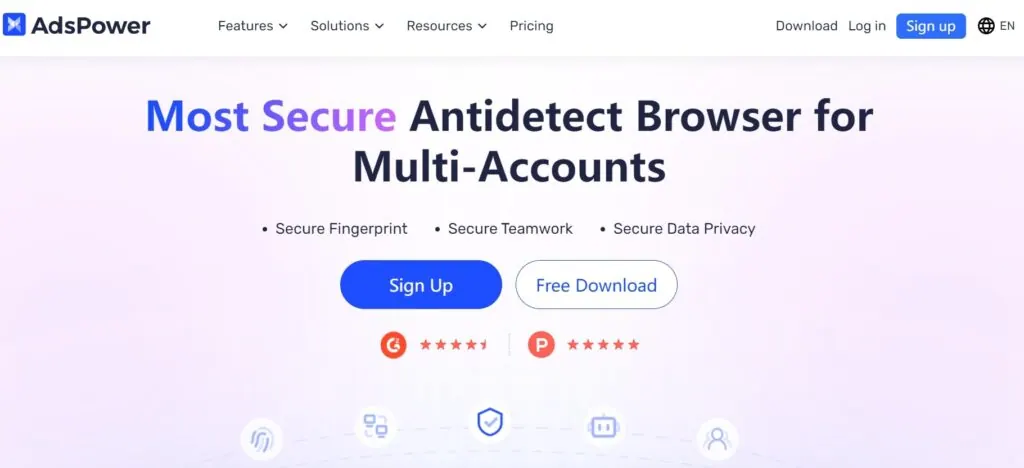
AdsPower is an antidetect browser focused on managing many accounts and automating repetitive work.
Pricing and Platforms
- Free plan with 2 profiles (5 in some regions), plus a 7-day trial of all features.
- Professional and Business plans are priced by the number of profiles and team members; see our AdsPower pricing guide.
- 40% off with annual billing, 15% off quarterly.
- Desktop apps for Windows, macOS and Linux; works with your own proxies.
Advantages
- Multi-account management for platforms such as Facebook, Google Ads and online stores.
- Separate browser fingerprints for each profile.
- RPA automation and a Synchronizer that repeats actions across profiles.
Disadvantages
- The free plan is small in most regions.
- Pricing depends on both profile count and team size, so costs for larger teams take some working out.
- Advanced features such as RPA and fingerprint customization have a learning curve.
3. Multilogin
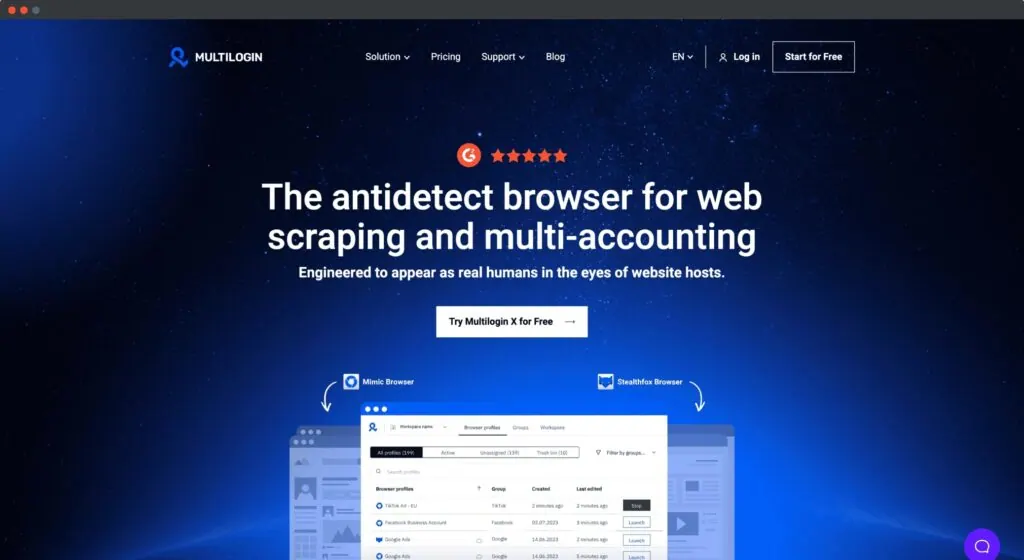
Multilogin is one of the oldest antidetect browsers and now combines browser profiles with cloud phones (cloud mobile profiles) on one platform.
Pricing & Platforms
- Free plan: 5 profiles forever, with a one-time 200 MB of proxy traffic.
- Pro: from $11/month for 10 profiles ($19 for 20, $29 for 50), with 1 to 3 GB of proxy traffic a month.
- Business: from $40/month for 100 profiles, up to 10,000 profiles with unlimited team seats.
- 35% off with annual billing; prices shown in USD.
- Desktop apps for Windows, macOS and Linux.
Advantages
- Mature fingerprint management with a long track record.
- Automation support for Playwright, Selenium and Puppeteer, plus API access.
- Cloud phones and browser profiles managed together.
Disadvantages
- Pro plans include only one or two team seats.
- The included proxy traffic is small on Pro plans, so most users still need their own proxies.
4. Dolphin Anty
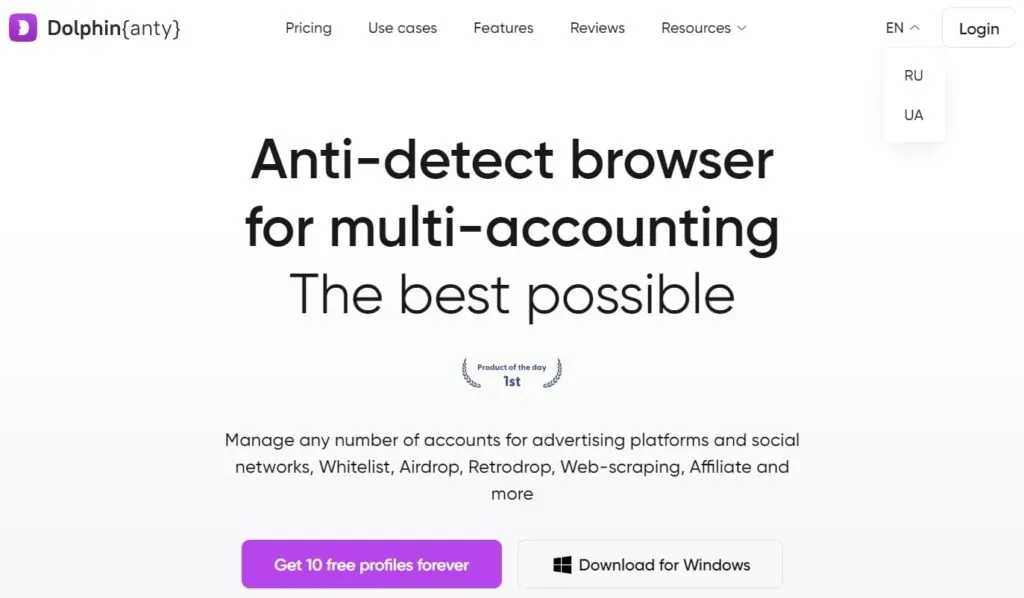
Dolphin Anty is an antidetect browser designed for affiliate marketing and media-buying teams that handle many ad accounts.
Pricing and Plans
- Free: up to 3 profiles.
- Starter: from $10/month for 20 profiles (up to 60).
- Base: $89/month for 100 profiles.
- Team: $159/month for 300 profiles.
- Enterprise: from $299/month for 1,000 profiles and more.
- Extra users cost $10 to $25/month on Base, Team and Enterprise; 20% off for 6 to 11 months, 40% off for a year.
Dolphin Anty runs on Windows, macOS and Linux, and profiles can use a Chrome or Firefox engine. There is no mobile app.
Advantages
- Tools aimed at advertising work, including a scenario builder and a Synchronizer.
- Choice of Chrome or Firefox engine for profiles.
- Integrates easily with proxy providers.
Disadvantages
- The free plan now includes only 3 profiles.
- Extra team members add $10 to $25 each per month.
- No mobile app.
5. 1Browser
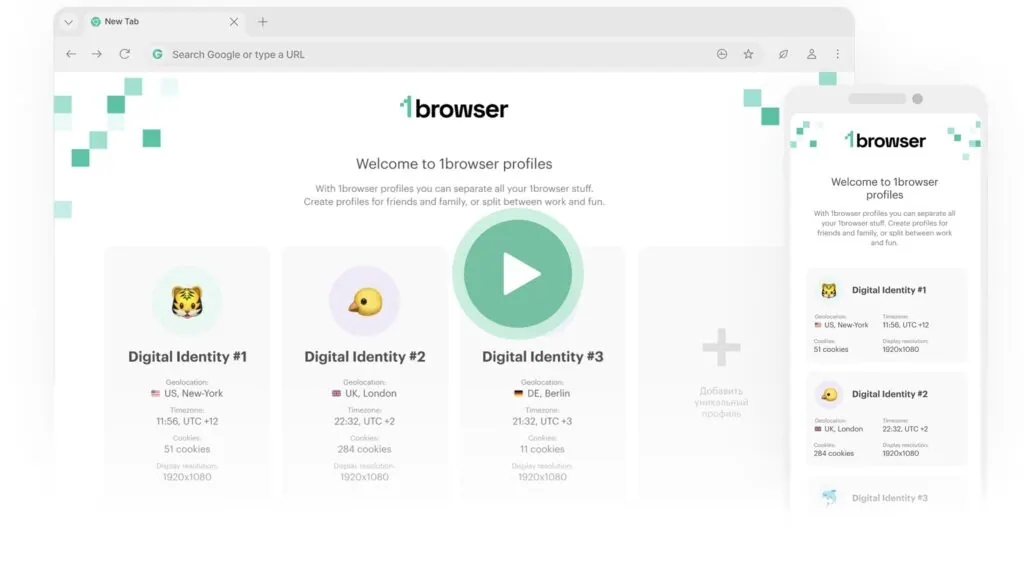
1Browser is a proxy browser for multi-account work: every profile keeps its own fingerprint and proxy, and mobile, residential and datacenter proxies are built in. It looks like Google Chrome, so there is almost nothing to learn.
Pricing and Availability
- Free: 5 profiles with proxies in a limited set of countries.
- Basic: $6/month ($5/month billed annually) for 10 profiles, with 2 GB of proxy traffic and proxies in 100+ countries.
- Custom: $9/month ($7/month billed annually) for 20+ profiles.
- Apps for Windows, macOS, Linux and Android; a local API lets you automate profiles over CDP on every plan.
Advantages
- Chrome-like interface that suits non-technical users.
- Built-in proxies, with traffic top-ups on demand.
- The same profile, proxy and fingerprint on your Android phone, kept in sync.
Disadvantages
- No team or profile-sharing features are listed on its plans.
1Browser is a simple way to keep a few social media, e-commerce or advertising profiles apart, especially for individuals who want proxies included.
6. Opera Browser
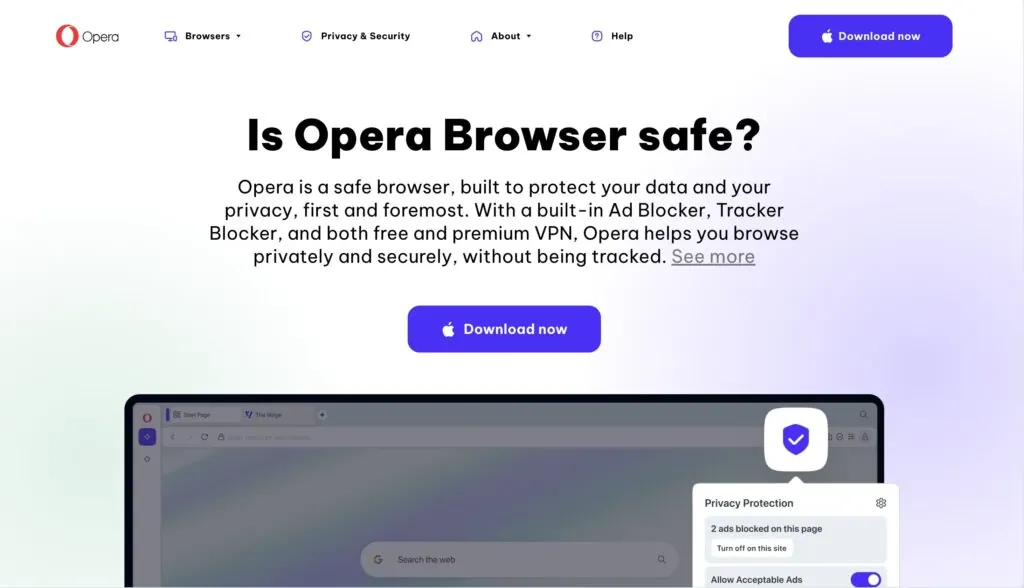
Opera is a mainstream Chromium-based browser with some of the most generous built-in privacy tools.
Advantages
- Free built-in VPN: unlimited, with no account needed, on desktop and mobile. It covers browser traffic only.
- Built-in ad blocker and tracker blocker.
- Familiar interface and support for Chrome extensions.
Disadvantages
- Ownership: Opera is listed on Nasdaq but controlled by China's Kunlun Tech, which holds about 69% of its shares; some privacy-minded users weigh that.
- The free VPN lets you pick a region rather than a specific country or server.
Opera suits casual users who want a VPN and ad blocking without installing anything else. It does not separate identities, so it is not a tool for running multiple accounts.
7. Brave Browser
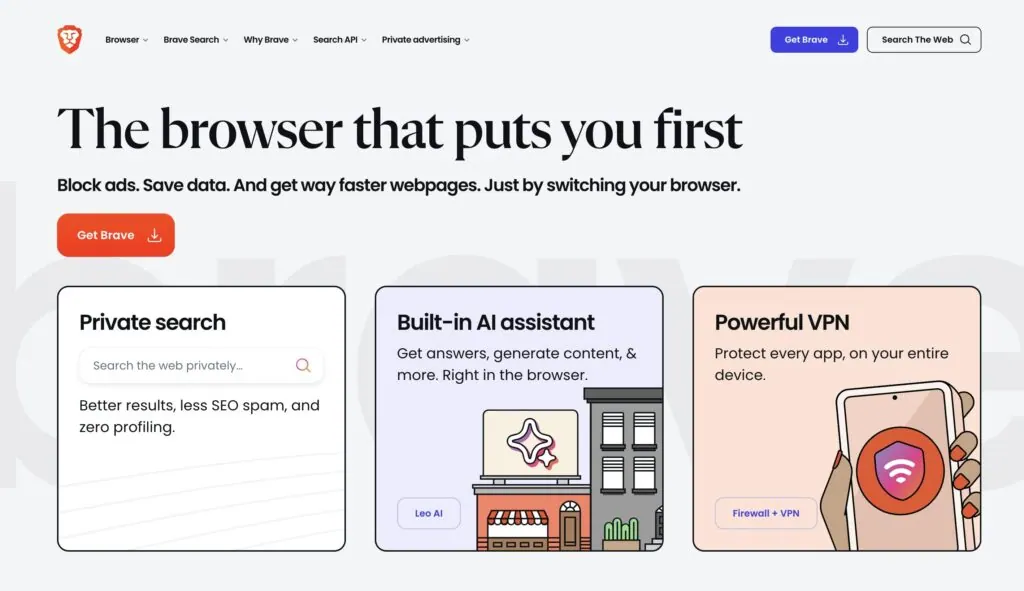
Brave is built around privacy by default and is our pick for most people who want a private everyday browser.
Advantages
- Shields block ads, trackers, cross-site cookies and fingerprinting by default, and Brave randomizes your fingerprint per site and session.
- Private windows with Tor for hiding your IP address.
- Brave Search and the Leo AI assistant, which needs no account and does not retain chats.
- Optional Firewall + VPN for $9.99/month or $99.99/year, covering up to 10 devices.
Disadvantages
- Crypto features such as Brave Rewards and the wallet are not for everyone, though they are optional.
- Aggressive blocking occasionally breaks a site until you lower Shields for it.
- Tor windows are slower and less protective than the full Tor Browser.
Brave is the easiest strong-privacy browser for daily use, but like every privacy browser it protects one identity at a time.
8. Firefox Browser
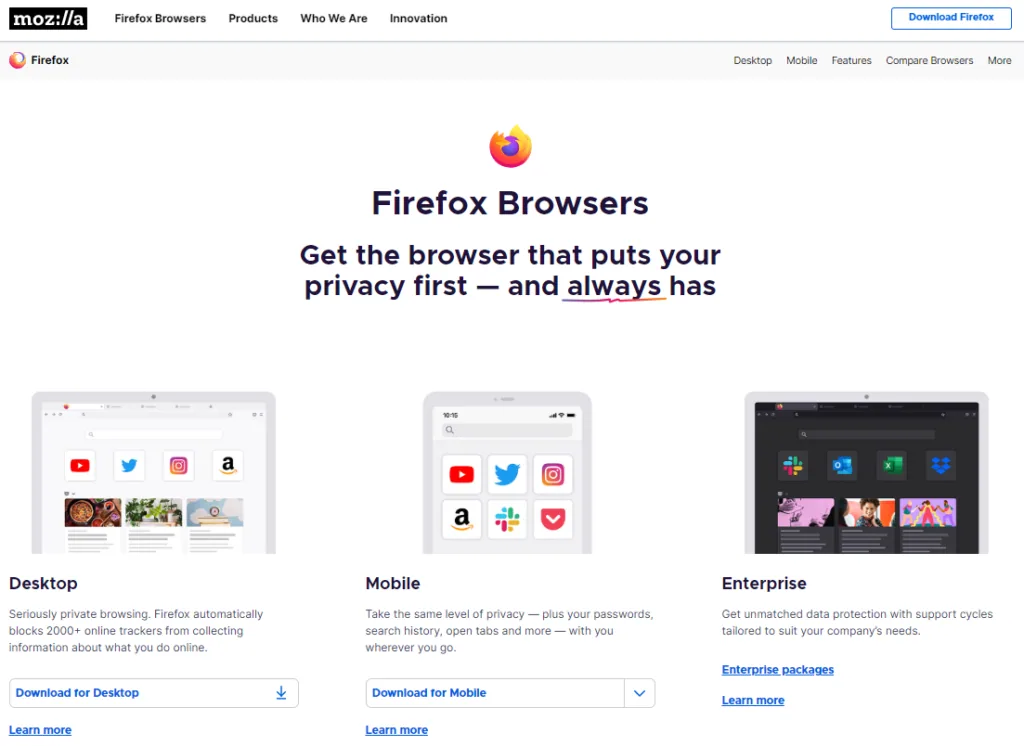
Firefox, developed by the non-profit-owned Mozilla, is the main independent alternative to Chromium-based browsers.
Advantages
- Enhanced Tracking Protection blocks known trackers by default, with a stricter mode available.
- Open source and built on its own Gecko engine.
- Since Firefox 149 (March 2026), a free built-in VPN with 50 GB a month that covers Firefox traffic.
- Highly customizable, with strong support for privacy extensions such as uBlock Origin.
Disadvantages
- Mozilla's 2025 terms of use and privacy FAQ changes drew criticism from privacy advocates.
- No built-in ad blocker; you add one yourself.
- Some websites are tested less on Firefox than on Chrome, so occasional compatibility issues appear.
Firefox suits users who want transparency, open-source code and fine control over their privacy settings.
Other private browsers worth knowing
- Tor Browser: routes traffic through the Tor network and makes users look alike. The strongest anonymity, but slower, and some sites block Tor. Available for desktop and Android.
- Mullvad Browser: developed by the Tor Project with Mullvad VPN; Tor Browser's anti-fingerprinting without the Tor network, designed to be used with a trustworthy VPN.
- DuckDuckGo: a free browser for Windows, Mac, iPhone and Android that blocks trackers, most ads and cookie pop-ups by default.
- Ungoogled Chromium: Chromium with Google's services removed, for users who are happy to manage updates and extensions themselves.
Conclusion
Choose your privacy browser by the job it needs to do. For private everyday browsing, Brave is the easiest strong option, Firefox the most transparent, and Tor Browser the most anonymous. For running several accounts or identities, an antidetect browser is the right tool, and Gologin is our top pick thanks to its free plan, $9/month entry price, apps for every major platform and team features on every paid plan.
Frequently asked questions
What is the most private browser in 2026?
For anonymity, Tor Browser. For everyday private browsing with little setup, Brave, with Firefox and Mullvad Browser close behind. If you need to keep several accounts or identities separate, an antidetect browser such as Gologin is the better choice.
Is an antidetect browser better for privacy than Brave or Firefox?
They solve different problems. Brave and Firefox reduce tracking for one person. Antidetect browsers create many separate profiles, each with its own fingerprint, cookies and IP address, so websites cannot link them to each other.
Is Gologin free?
Yes. Gologin has a free-forever plan with 3 profiles. Paid plans start at $9/month, or $4.50/month billed annually, and there is a 7-day free trial of paid features.
Do I need a VPN or proxy with a private browser?
A private browser blocks trackers but does not hide your IP address, so add a VPN if you want that, or use Opera's, Brave's or Firefox's built-in options. For multiple identities, give each antidetect profile its own proxy; FloppyData, for example, sells residential, mobile and datacenter traffic from $1/GB.
Does incognito mode make me private?
No. Incognito or private mode only stops your browser from saving history and cookies on your device. Websites, your internet provider and trackers can still see your IP address and fingerprint.